“Free” Apps are Not Free
The Cost Is Always Paid by Someone
There’s a popular idea in software that apps should be free. It sounds generous, but it ignores how software actually gets built. Applications require time to design, build, test, refine, and maintain. Those costs don’t disappear just because a price tag does. Someone always pays—whether it’s the developer, the user, or both in less obvious ways.
When an app is described as “free,” what it usually means is that the cost has been shifted. It may be covered by ads, paid for with user data, or deferred through subscriptions and upsells later. None of those approaches remove the cost; they just move it somewhere else.
Free Often Changes the Product
Free products tend to change over time, and not always for the better. When revenue comes from advertising or engagement metrics, the app’s priorities shift. The goal becomes capturing attention, collecting data, or driving usage at all costs. The user experience gradually bends to serve those incentives instead of the person using the app.
That tradeoff is rarely visible at first, but it shows up eventually—in cluttered interfaces, dark patterns, or features designed to keep you engaged rather than actually help you.
Paying Sets a Clear Relationship
When someone pays for a product, even a modest amount, it establishes a straightforward relationship. The value exchange is clear: the user pays for a tool, and the developer is responsible for making that tool reliable, usable, and worth the price over time.
From my perspective, charging for an app isn’t about squeezing every possible dollar out of it. It’s about acknowledging that the work has value and that maintaining quality requires ongoing effort. A fair price aligns incentives in a way that “free” rarely does.
Value Deserves a Price
There’s a tendency to treat software differently from other tools. We expect to pay for equipment, books, and services without much debate, yet software is often singled out as something that should cost nothing. That expectation doesn’t reflect reality.
If an app helps you train, organize your life, or stay consistent with something that matters to you, then it’s providing real value. Paying a reasonable price for that value isn’t a loss—it’s an exchange that keeps the product honest and sustainable.
Transparency Over Tricks
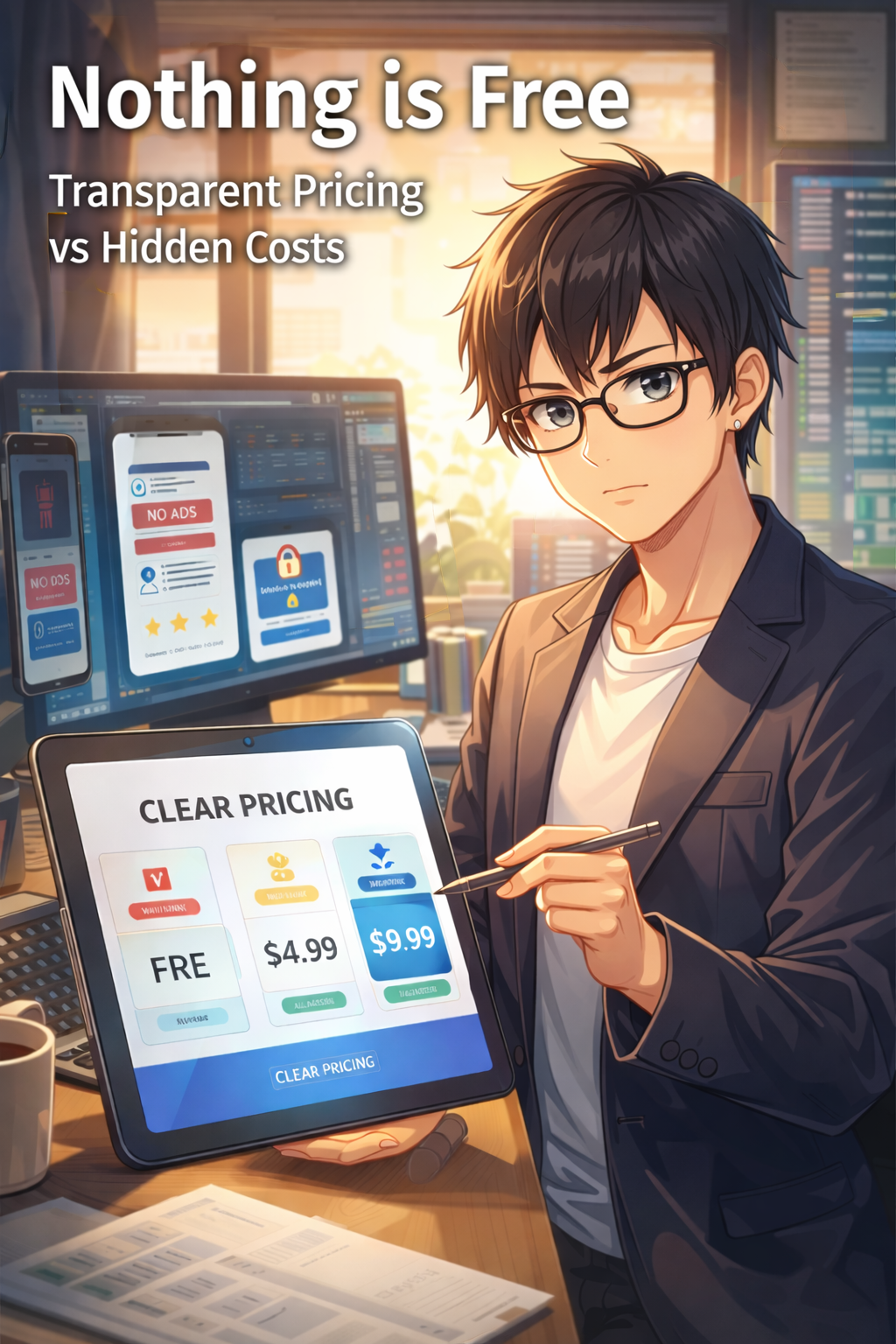
I’d rather be clear about pricing than hide costs behind ads, tracking, or engagement tactics. More importantly, I think most people would rather understand what they’re paying for and why. Clear pricing sets expectations upfront and removes the guesswork about how a product is actually being sustained.
When the cost is explicit, the relationship is simpler. You know what you’re getting, the developer knows what they’re responsible for, and there’s no need to trade attention, data, or trust to make the numbers work. That kind of transparency isn’t just fairer—it makes the product easier to respect and rely on over time.